Somersetshire Coal Canal and the Wansdyke
The Wansdyke is a nationally important heritage asset and is one of the most significant historical features within the area and is a Scheduled Monument. This is defined as a Designated Heritage Asset within the National Planning Policy Framework (NPPF). The Somersetshire Coal Canal is also a Designated Heritage Asset.
The NPPF Section 16 – Conserving and Enhancing the Historic Environment paragraph 196 sets out the context for local policy.
The NPPF sets out the approach to considering impacts to designated heritage assets under paragraph 205 notes the following:
‘When considering the impact of a proposed development on the significance of a designated heritage asset, great weight should be given to the asset’s conservation (and the more important the asset, the greater the weight should be). This is irrespective of whether any potential harm amounts to substantial harm, total loss or less than substantial harm to its significance.’
Paragraph 206 further notes the following:
‘Any harm to, or loss of, the significance of a designated heritage asset (from its alteration or destruction, or from development within its setting), should require clear and convincing justification. Substantial harm to or loss of:
b) assets of the highest significance, notably scheduled monuments, protected wreck sites, registered battlefields, grade I and II* listed buildings, grade I and II* registered parks and gardens, and World Heritage Sites, should be wholly exceptional.’
These historic assets benefit from the provisions of Core Strategy Policy CP6 and Policy HE1. However, the importance of these linear routes is highlighted in a separate policy and are defined on the Policies Map with a buffer to catch the widest point of the assets.
Policy HE2 seeks to ensure there is appropriate mitigation and/or enhancement (consistent with Policy HE1) for any development adversely affecting the physical remains and/or historic routes of the Wansdyke or Somersetshire Coal Canal, as defined on the Policies Map, and/or their setting.
We previously consulted on this policy area in the spring 2024 options document and a summary of the main issues raised in comments is set out below. Since that time we have undertaken further assessment and evidence work. As a result we are proposing revised policy options and amended creation/diversion areas.
A summary of the comments received based on frequent topic areas are as follows:
- Policy HD/SCCW Revitalisation Support vs. Opposition: Divided opinions on policy amendments for canal restoration, with support for public benefit and opposition citing negative impacts on land and livelihood. Potential for Canal as Community Asset vs. Risk to
- Personal Enjoyment and Property: Balance sought between the canal as a community asset for leisure and connectivity, and the protection of individuals' property enjoyment. Preservation of
- Heritage vs. Modern Development Concerns: Preservation of the canal's historical significance is valued, yet concerns exist over potential loss of land and negative impacts on local heritage from modern developments. Economic and Community Benefits vs. Property and
- Environmental Concerns: Restoration seen as bringing economic and social benefits, with concerns about adverse environmental effects and property values. Recreational Use and
- Access vs. Loss of Privacy and Tranquillity: Advocacy for recreational paths contrasts with concerns over privacy and tranquillity for residents near the canal. Nature Conservation and
- Biodiversity vs. Construction and Expansion Drawbacks: Project seen as an opportunity for wildlife and biodiversity, though there are reservations about the impacts of construction. Public
- Engagement and Communication vs. Perceived Exclusivity: Need for inclusive decision-making emphasized, with concerns over lack of proper community consultation and notification of plans
We are now proposing separate policies i.e. one policy relating to the protection of the heritage asset conserving its significance, and another optional policy relating to its restoration/improvement. The policy approach and optional policy seek to set out a positive strategy for the conservation and enjoyment of the historic environment, including heritage assets. Section 16 paragraph 203 of the National Planning Policy Framework (NPPF) sets out amongst other things that Plans should set out a positive strategy for the conservation and enjoyment of the historic environment, including heritage assets most at risk through neglect, decay or other threats.
In line with the NPPF, adopted policy HE2 is required to be retained to ensure there is a positive strategy to ensure the Somersetshire Coal Canal which is a heritage asset can be conserved and enjoyed.
Following further consultation with the Somersetshire Coal Canal Society (SCCS) the proposed diversion at Dunkerton previously consulted on in 2024 is no longer required. Regarding restoration, the SCCS objective at this location was to mitigate the impact of restoration on an existing dwelling by diverting the line through what was historically an open garden area of another dwelling.
Amendments have also been made to proposed diversions at Radford and Camerton following further assessment. Most notably the Radford diversion has been shifted further north away from neighbouring properties.
With regards to Camerton the alterations are intended to allow a better transition to the historic route at the eastern end of the diversion. Following further assessment it is noted that this parcel of land has been developed in recent years. The mitigation benefits of the extension are therefore significantly reduced, as such revised plans of the SCCS are to restore the canal on its historic route when funding and the opportunity arises.
Below are areas of the route subject to diversion that would be displayed on the Policies Map. As set out above some of these diversion/restoration areas have been amended since those shown in the 2024 options document and the proposed diversion at Dunkerton is no longer required.
Somersetshire Coal Canal and the Wansdyke - Proposed policy maps
Below are areas of the route subject to diversion that would be displayed on the Policies Map. As set out above some of these diversion/restoration areas have been amended since those shown in the 2024 options document and the proposed diversion at Dunkerton is no longer required.
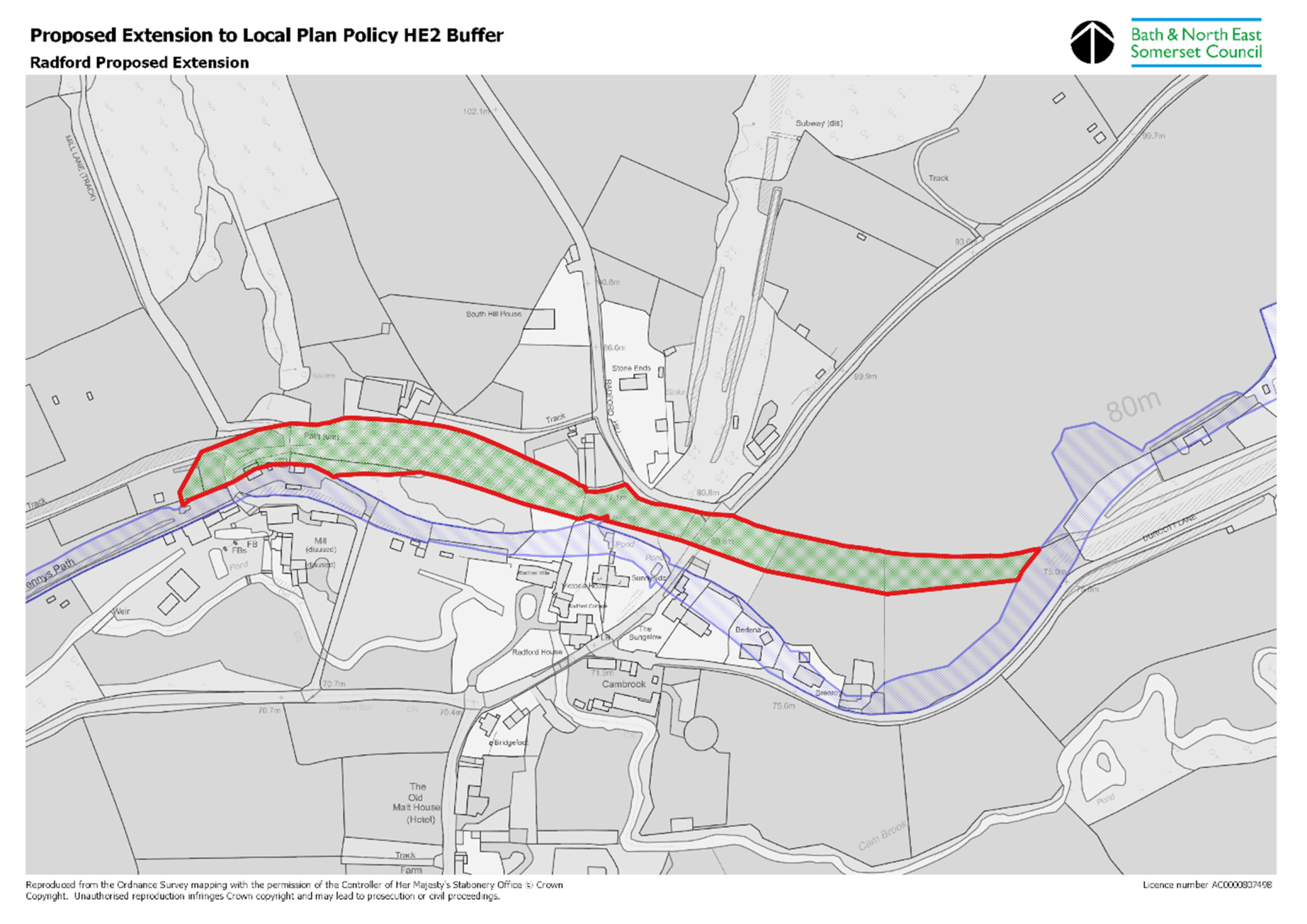
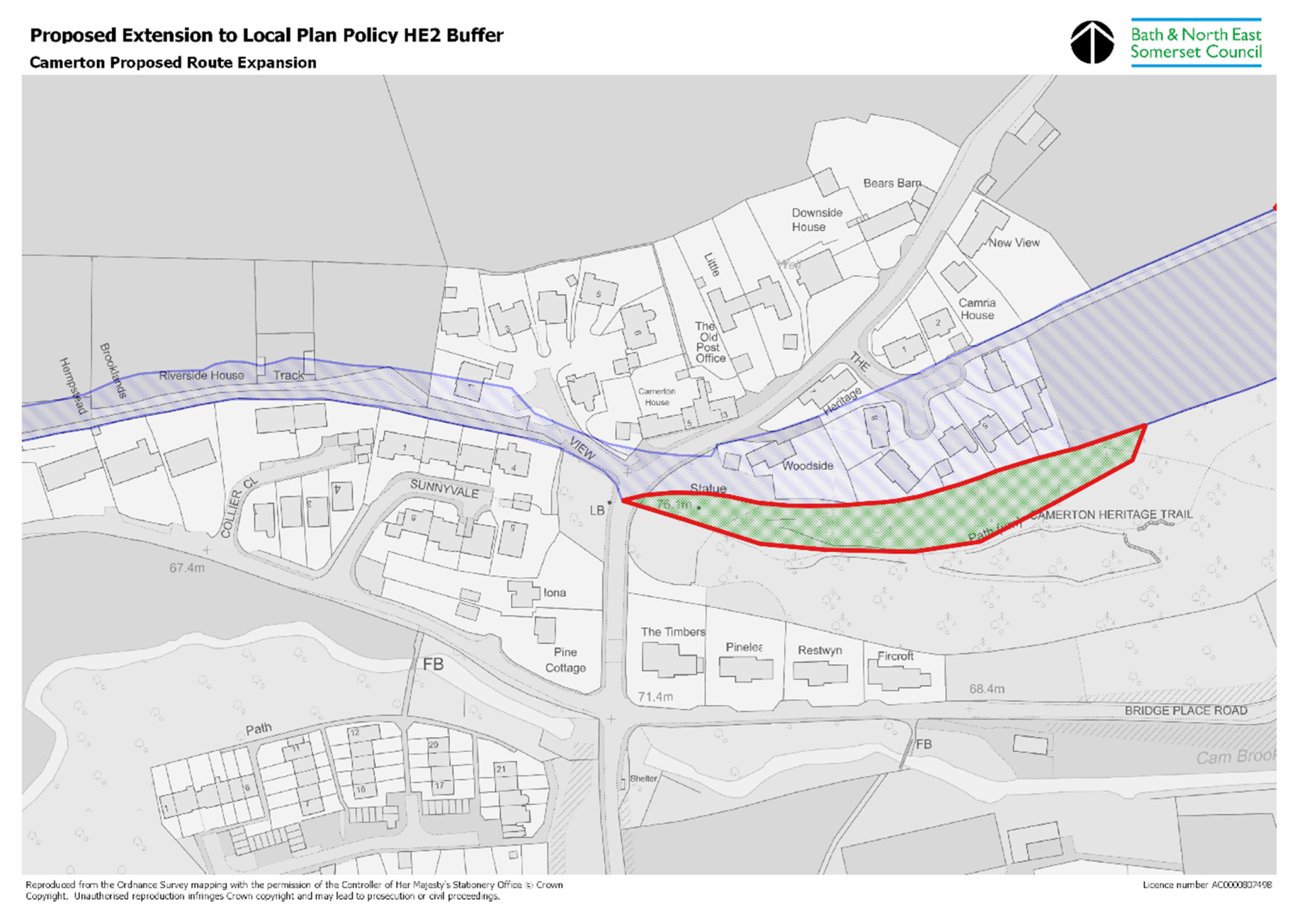
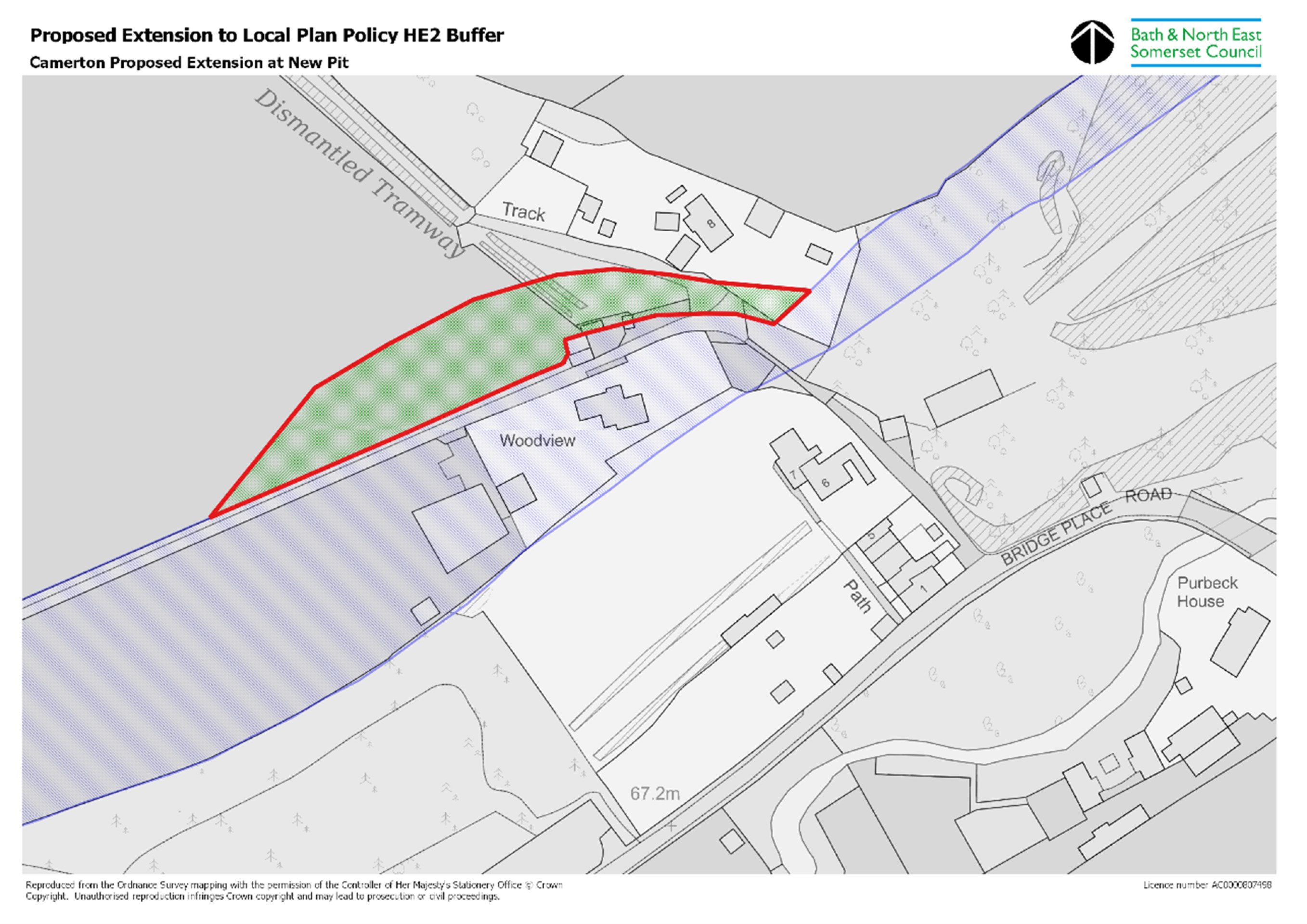

Somersetshire Coal Canal and the Wansdyke – Proposed Policy Options
| No | Options | Explanation | |
| 1 | Retain the existing adopted policy HE2, and the protected route currently shown on the policies map. | The proposed approach is retaining the adopted Placemaking Plan policy that protects the existing route/heritage asset from other development that would require planning permission. The council is of the view that we should continue to protect the heritage asset and this approach is in line with the NPPF. Furthermore, the Placemaking Plan policy was considered at Examination and the Planning Inspector found the policy approach sound. | |
| 2 | Development of new policy for restoration and creation. | Development of a separate policy option which seeks restoration/creation of a diverted route (that will be displayed on the Policies Map). This option is to take account of elements of the existing route which have been lost to development and consider deleting them from the protected route shown on the Policies Map. For example, both buildings and areas of immediate residential/building curtilage would be deleted with other land remaining within the protected route . Any deleted element of the existing route would then be replaced by a diverted route/area which would then be shown on the Policies Map and protected from other forms of development. | |
An example of the proposed amendment to sections of the policies map is set out in the link below and alongside Draft Policy Wording.